Industrial Automation Systems for Modern Horticulture
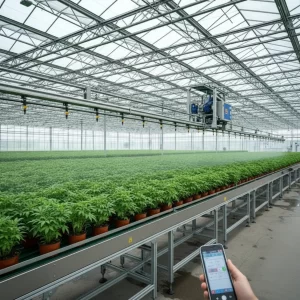
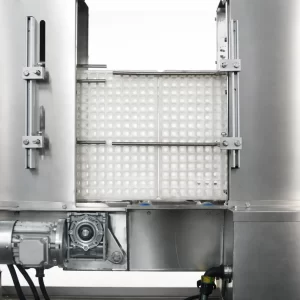
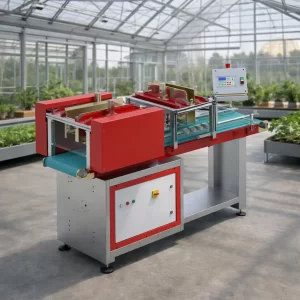
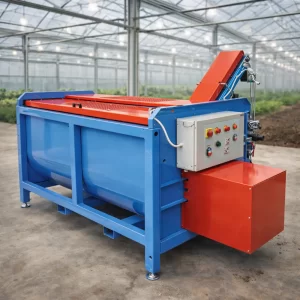
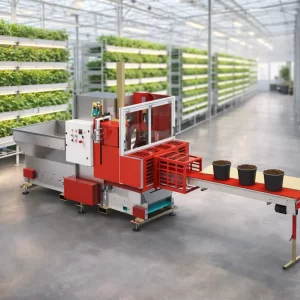
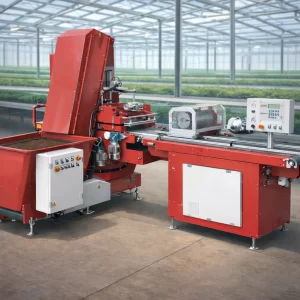
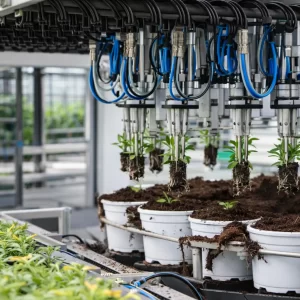
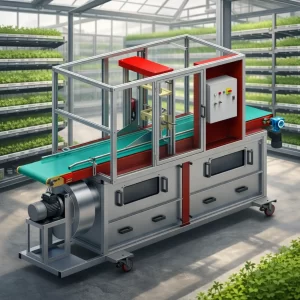
This category includes a diverse range of equipment engineered for substrate preparation, container filling, and internal logistics. From high-speed seeding lines and robotic transplanters to sophisticated palletizers and tray washers, these systems facilitate seamless transitions between production stages. By integrating hardware such as conveyor belts, bale breakers, and labeling machines, growers can establish a continuous workflow that minimizes manual intervention.
The functional role of these automation systems is to synchronize various production modules into a cohesive operational unit. These systems are designed to interface with existing infrastructure, ensuring that tasks like soil mixing, trimming, and irrigation are executed with consistent technical accuracy. This architectural approach allows for scalable production layouts that can adapt to changing crop requirements or facility expansions.
Key Benefits for Professional Use
Process Repeatability: Ensures uniform substrate density, precise seed placement, and consistent plant handling across high-volume batches.
Operational Throughput: Supports continuous production cycles, significantly increasing output compared to manual or semi-automated methods.
Labor Efficiency: Reduces dependency on manual labor for repetitive, physically demanding tasks, allowing staff to focus on specialized crop management.
System Compatibility: Designed for integration with standard greenhouse ERPs and internal climate control or irrigation logic.
Long-Term Reliability: Built to industrial standards to withstand the humid, high-usage environments typical of commercial CEA facilities.
Typical Applications
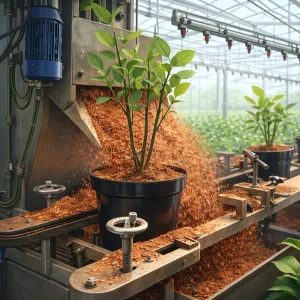
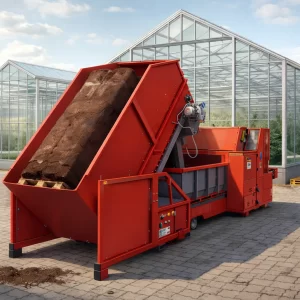
Substrate Processing: Automated bale breaking, soil mixing, and bark topping for consistent media preparation.
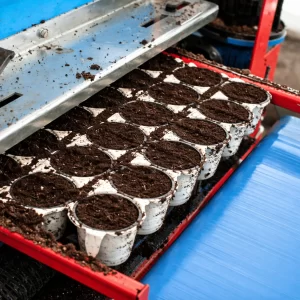
Propagation and Seeding: High-precision tray filling and seeding lines for nursery and greenhouse starters.
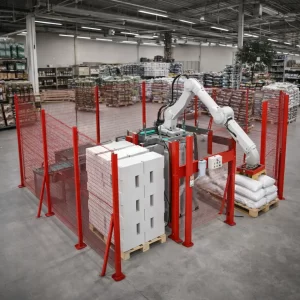
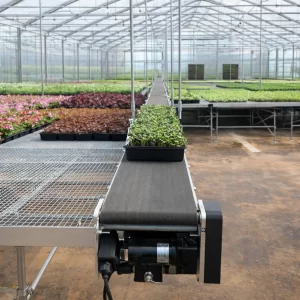
Plant Logistics: Internal material handling using buffer belts and automated palletizers for efficient distribution.
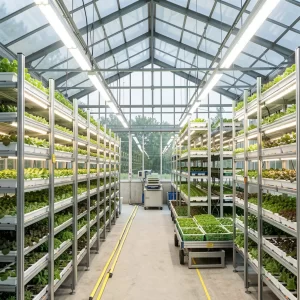
Controlled Environment Agriculture: Specialized trimmers and vertical farming modules for space-constrained or multi-tier production.
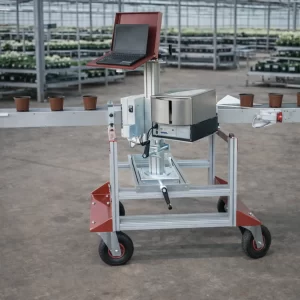
Sanitation and Maintenance: Automated tray washing and labeling to maintain hygiene standards and traceability.
Technical Consultation and Project Support
Selecting the appropriate automation systems requires a detailed analysis of production goals, facility layout, and existing technical constraints. We emphasize early-stage consultation to ensure that individual modules are correctly integrated and scaled for long-term operational growth. Our focus remains on providing technical clarity to help operators optimize their production architecture and system reliability.