Transplanters
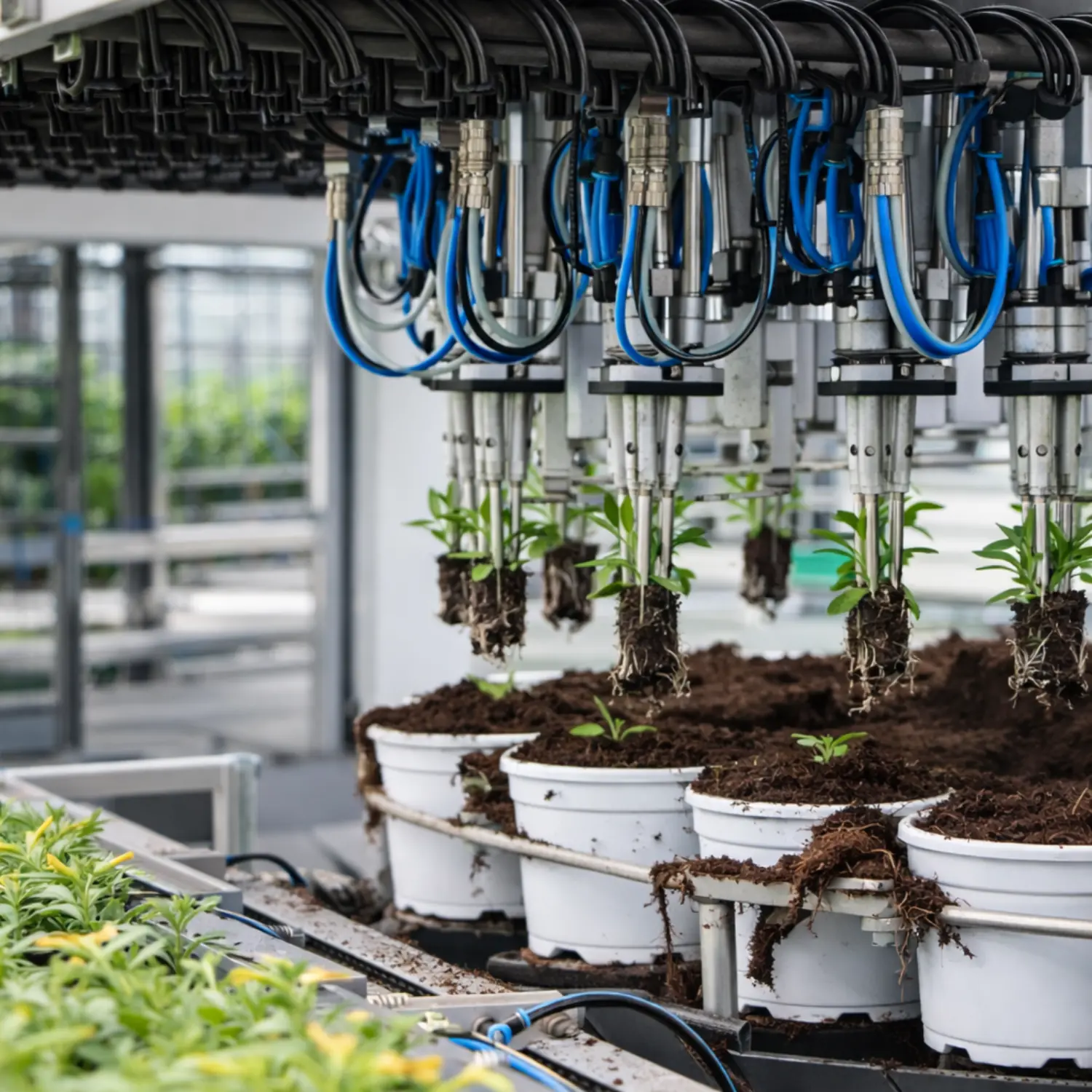
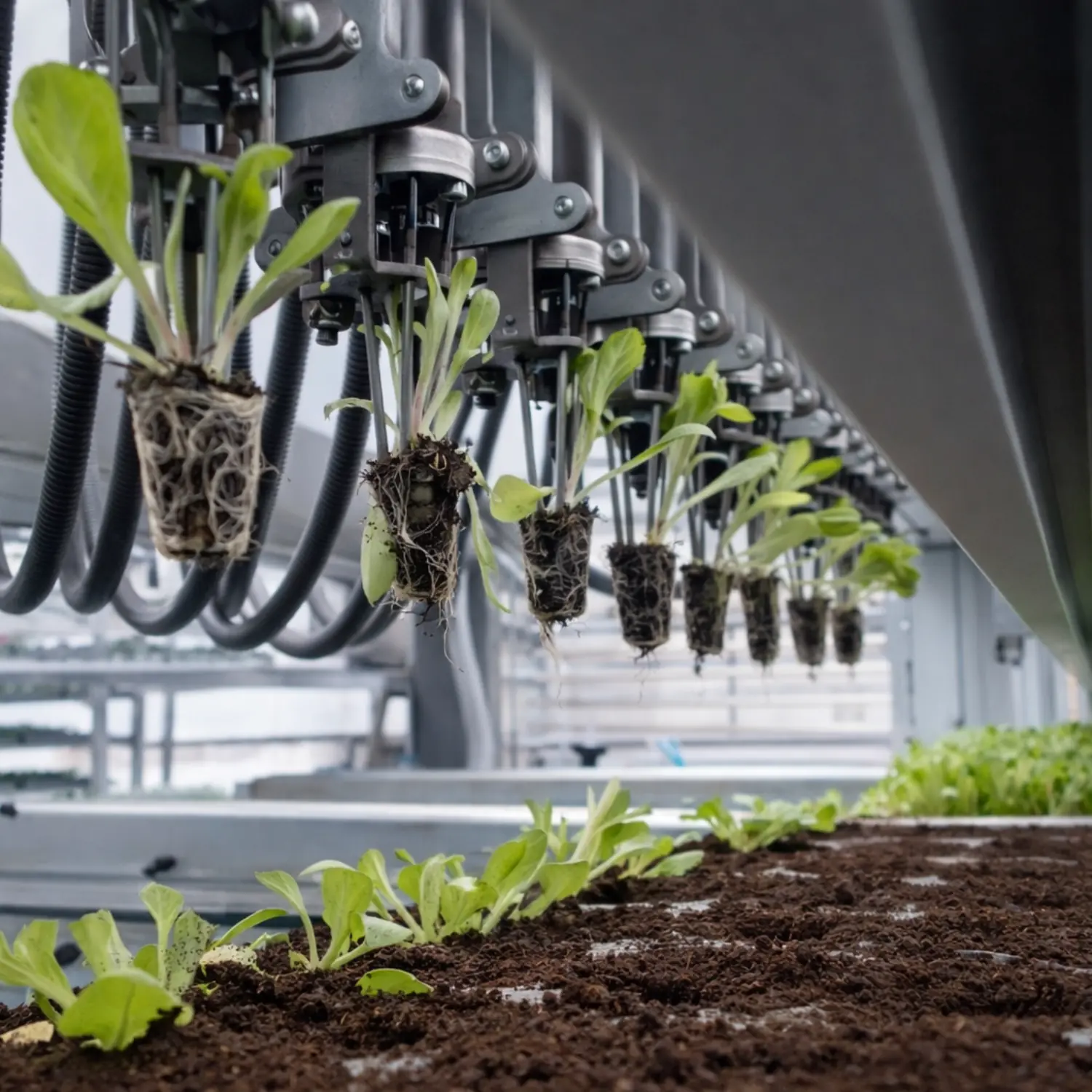
Automated transplanters streamline the relocation of seedlings from germination trays into final containers, such as pots, crates, or larger trays. These systems are essential for industrial greenhouse and nursery operations requiring high-throughput production with minimal mechanical stress on young plant material.
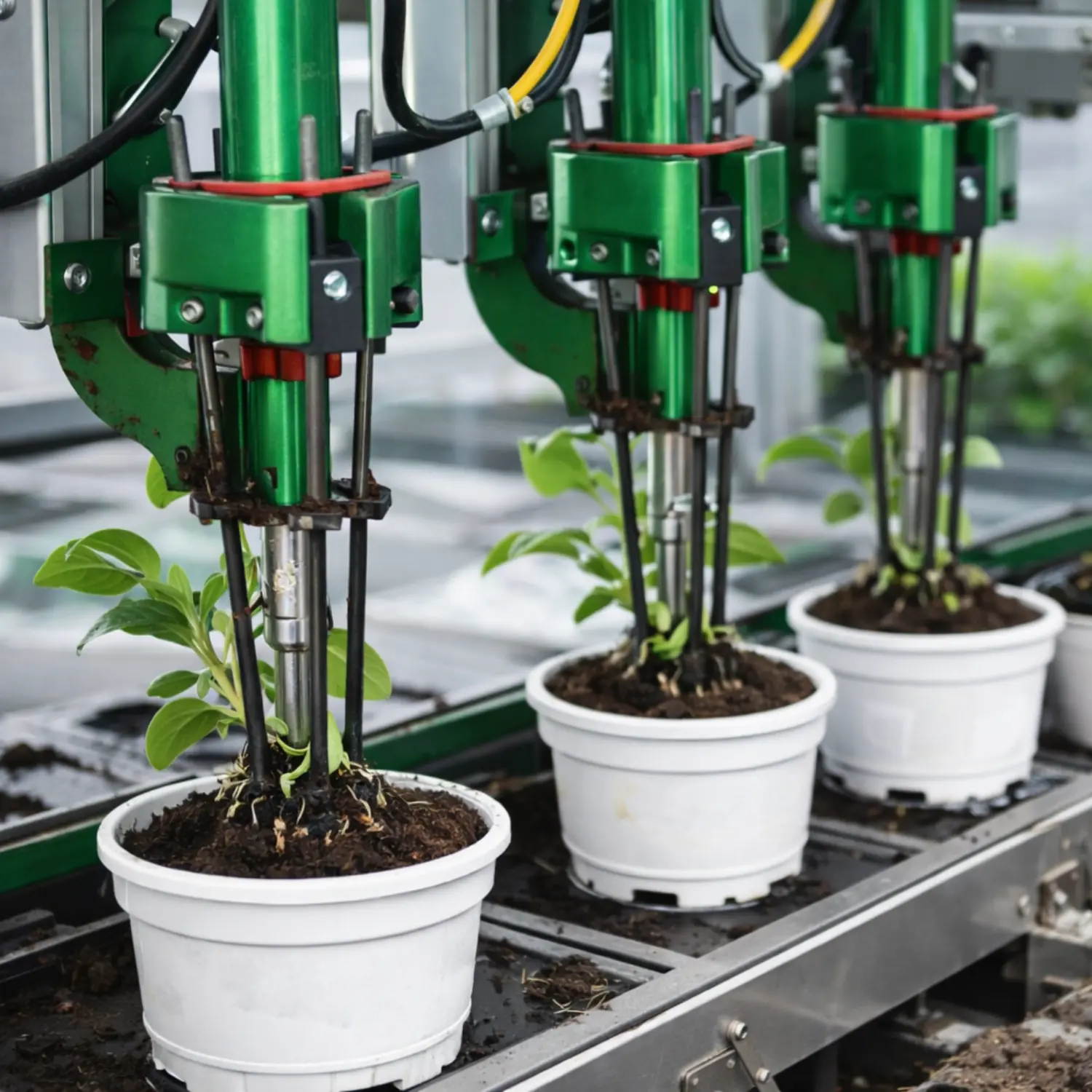
System Overview
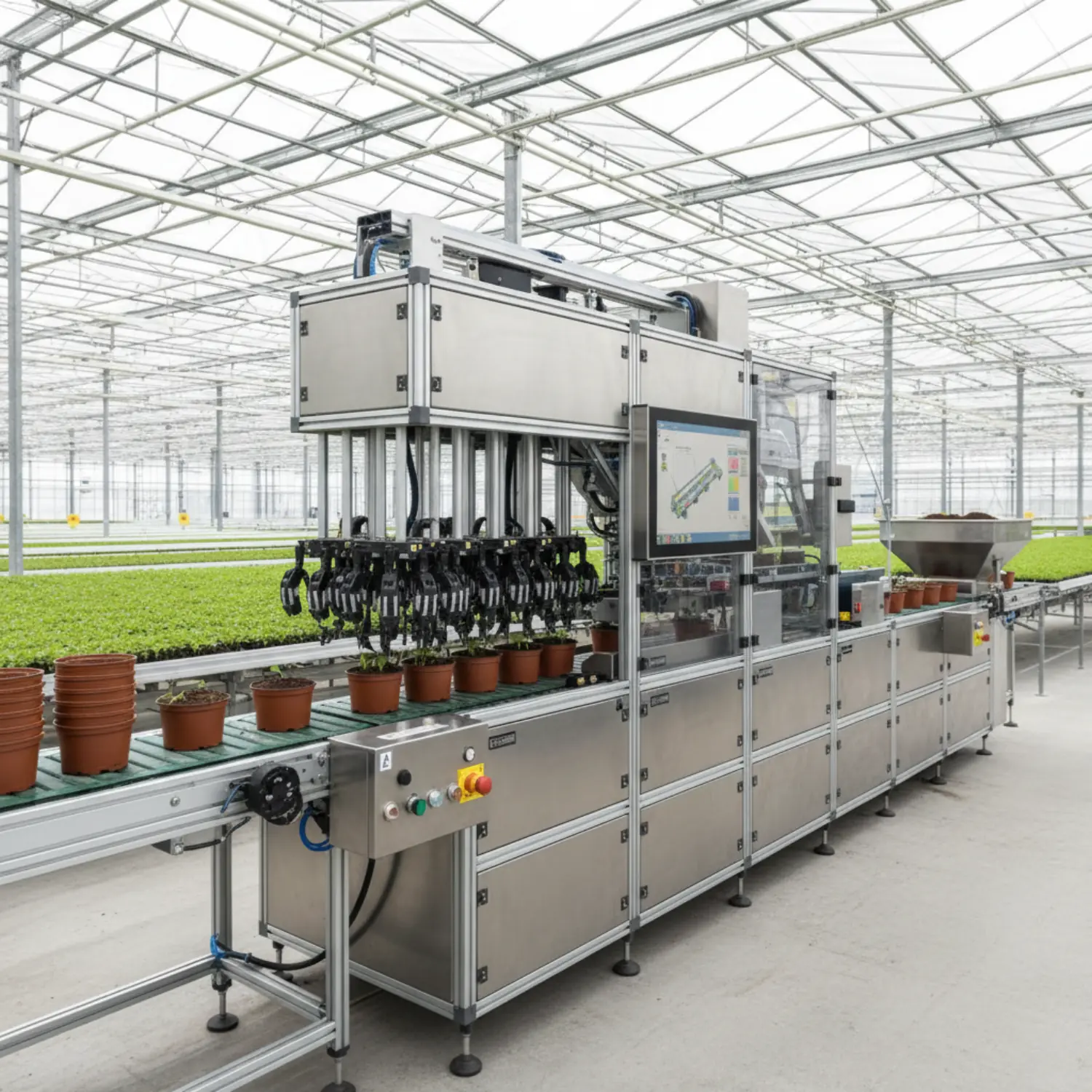
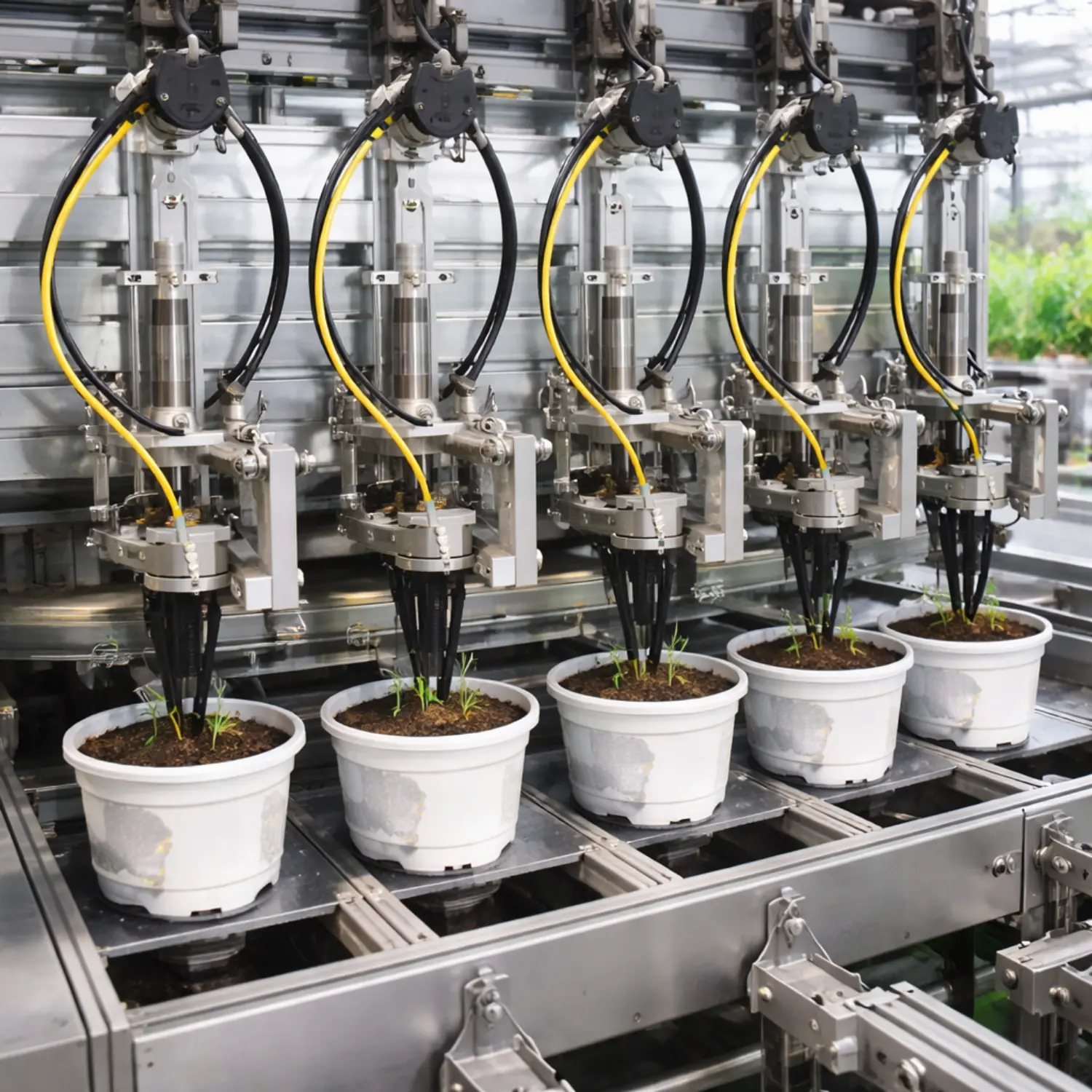
Modern transplanting systems utilize independently motorized grippers or clamps to ensure high-speed, precise placement of seedlings. These units are typically integrated into larger production lines featuring conveyors, soil fillers, and potting modules to create a seamless workflow. By utilizing brushless motor technology and adjustable picking parameters, these systems achieve consistent results across various plant species and container formats.
Control of these systems is managed through intuitive interfaces that allow operators to store specific programs and adjust parameters like deposit depth and lateral movement. This level of automation supports a stable production environment where technical reliability and low maintenance requirements are prioritized. The modular design of transplanters allows for easy integration into both existing nursery layouts and new greenhouse projects.
Key Benefits for Professional Use
Process Repeatability: Automation ensures consistent planting depth and orientation, leading to uniform crop development across large batches.
Reduced Labor Dependency: High-speed systems, capable of handling up to 1,500 plants per hour per gripper, significantly reduce the manual workforce required for transplanting cycles.
Operational Reliability: The use of individual cylinders and motorized grippers minimizes system-wide downtime, as wear parts like needles and guides are designed for rapid field replacement.
Enhanced Plant Health: Precision handling reduces physical contact and root disturbance, maintaining the structural integrity of the seedling during high-speed transitions.
System Scalability: Modular configurations allow transplanters to be scaled according to production volume, from compact units to multi-clamp industrial lines.
Typical Applications
Commercial Greenhouse Crop Production: High-volume transplanting for ornamental plants, vegetables, and medicinal crops.
Nursery Propagation: Moving delicate seedlings from high-density plug trays to finishing pots or secondary trays.
Automated Potting Lines: Integration with potting machines and tray fillers for end-to-end containerized production.
Vertical Farming Systems: Specialized handling for multi-layer cultivation setups where space and precision are critical.
Internal Logistics: Coordinating plant movement between propagation zones and finishing areas via integrated conveyor systems.
Technical Consultation and Project Support
Optimizing a transplanting line requires careful consideration of tray formats, plant varieties, and desired throughput. Our technical team is available to discuss specific project requirements, system integration challenges, and production layout scalability. We invite early-stage technical dialogue to ensure the selected transplanters align with your facility’s operational goals and automation infrastructure.
Need help? Contact us
For personalized assistance or inquiries, our dedicated team is here to help. We’re committed to providing you with exceptional support and guidance, ensuring that all your needs are met efficiently and professionally.